The Next Chapter: Decoding the GM Chevy Camaro Replacement
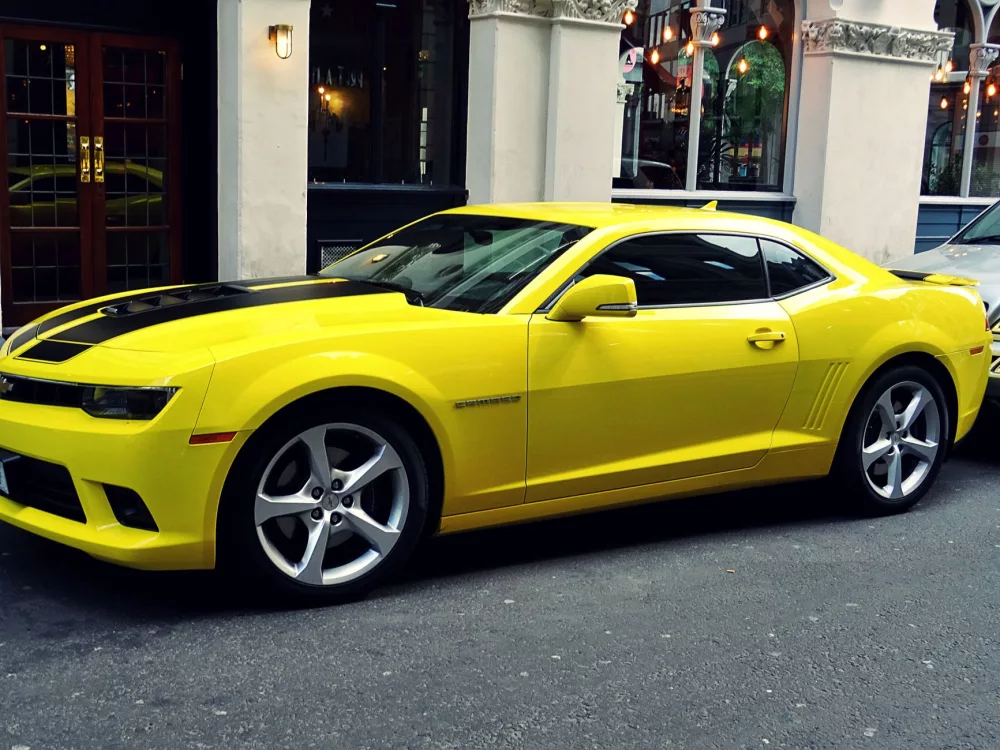
When the news broke that the current sixth-generation Chevrolet Camaro would cease production after the 2024 model year, my heart, like many enthusiasts, sank a little. It wasn't entirely unexpected, I admit, given the sales trends and GM's aggressive pivot towards electric vehicles. But still, the Camaro, to me, represents raw American muscle, a spirit of rebellion, and a rich, storied history. So, the big question on everyone's mind, including mine, is: what exactly does a 'GM Chevy Camaro replacement' even look like?
The Sunset of an Icon: What We're Leaving Behind
It's important to understand what we're saying goodbye to before we can truly appreciate what might come next. The sixth-gen Camaro, especially in its ZL1 and SS forms, offered incredible performance for the money. We're talking about cars that could go toe-to-toe with far more expensive machinery, both on the street and at the track. I always admired its sharp handling, muscular design, and that unmistakable V8 rumble. Its discontinuation marks the end of an era for internal combustion engine (ICE) pony cars from GM, at least in the traditional sense.
Many factors contributed to this decision. SUV sales dominate the market, for one. And honestly, the competition, particularly from Ford's Mustang, always kept the pressure on. Chevrolet’s commitment to an all-electric future is a massive undertaking, and it seems the Camaro, as we know it, just didn't fit into that immediate blueprint. It’s a bit sad, isn't it? But, as I see it, every ending is just a new beginning.
Whispers of an Electric Phoenix
Alright, so if it's not going to be another V8-powered beast, then what? The strongest rumors and my own gut feeling point squarely towards an electric future for the Camaro nameplate. Now, before you start groaning, hear me out. GM has made huge investments in its Ultium platform and battery technology. This isn't just about building glorified golf carts; this is about performance. Think Cadillac Lyriq, Hummer EV, and the upcoming Blazer EV SS. These aren't slouches.
- Platform Potential: The Ultium platform is incredibly flexible. It can support various vehicle types, sizes, and power outputs. I imagine a future Camaro could leverage this for mind-bending acceleration and impressive range.
- Performance, Electrified: While the V8 sound will be missed, electric motors offer instant torque. Imagine a Camaro that launches harder than anything before it, silently devouring the asphalt. That's a thrilling thought.
- A New Kind of Muscle: It won't be the same kind of muscle, I know. But it could redefine what American muscle means in the electric age. We're talking about sophisticated traction control, precise power delivery, and potentially, innovative battery placement for ideal weight distribution.
What Form Will It Take? More Than Just a Coupe?
This is where things get really interesting, and frankly, a bit anxiety-inducing for traditionalists like me. Will the next Camaro replacement actually be a coupe? Or will GM lean into the profitable SUV craze? We've already seen the Mustang nameplate extend to the Mach-E SUV, and Dodge is bringing an electric Charger Daytona, which, while a coupe, is a different beast entirely.
Some theories I've heard suggest it could manifest as a performance EV sedan, drawing inspiration from its muscle car roots but offering more practicality. Others even hint at a high-performance EV crossover, which, while it might make business sense, would be a tough pill for many fans to swallow. Personally, I'm really hoping for at least a two-door variant, keeping that iconic silhouette alive. I mean, c'mon, it's a Camaro!
Design Language and Heritage
One of my biggest concerns, and something I've heard from other enthusiasts, is how GM will handle the design. The Camaro has a distinct look. It's aggressive, wide, and low-slung. If they go electric, will they retain any of those classic cues? I'd love to see a modern interpretation that clearly nods to its past, perhaps with a contemporary grille treatment that signals its EV powertrain but doesn't erase its identity. Think LED light signatures that echo the original's fierce gaze, or a strong, sculpted body that still conveys power.
It's a fine line to walk, bridging heritage with innovation. We want something new and exciting, but we also want it to feel like a Camaro. It's a tall order for the design team, I'm sure.
The Road Ahead: Challenges and Opportunities
GM faces a significant challenge with the Camaro replacement. They need to create a vehicle that:
- Appeals to the existing, loyal Camaro fan base who might be skeptical of EVs.
- Attracts new, younger buyers who are interested in electric performance.
- Stands out in an increasingly crowded EV market.
- Lives up to the performance legacy of its predecessors.
That's a lot to ask! However, the opportunities are just as vast. An electric Camaro could offer unparalleled performance, a quiet yet powerful driving experience, and a chance to truly innovate. Imagine advanced driver-assistance systems, hyper-connected infotainment, and over-the-air updates that continually improve the car. I believe GM has the engineering prowess to pull this off, but it requires courage and a clear vision.
For me, the anticipation is building. While I’ll always cherish the roar of a V8 Camaro, I’m genuinely excited to see what GM cooks up next. My hope is that they deliver something that respects the past while fearlessly embracing the future, giving us a Camaro replacement that redefines what a true American performance machine can be in the electric age. It won't be easy, but I'm cautiously optimistic that they can make us fall in love all over again. Here's to the next chapter; I can't wait to see it unfold.
Editorial Team
Senior staff writer & editor delivering comprehensive analysis, news reports, and detailed guides.